| |
|
|
| |
Home
Kenya
Sierra Leone
Somalia
South Africa
Tanzania
"Z" countries |
|
| |
AFRICA |
|
| |
The
Continent of Africa, perhaps best known for its diamonds and
gold, is also host to numerous corundum localities.
As it is being developed, more land is exposed and more
stones are discovered. The underscored blue
hyperlinks will get you to the various countries represented
here. |
|
| |
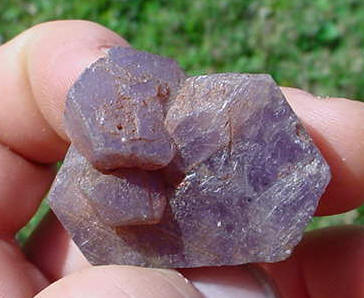
I
received an email from John Saul (one of the poineers of
colored gemstone mining in East Africa), who had seen our
Mineralogical Record article and wanted to know if we would
be interested in some of his old specimens. After the
excited “Do bears go in the woods?” reply, we got down to
business; and now there are several more great specimens
from his collection in ours. Because of this provenance,
the suite will be kept together. Important specimens from
his own John Saul Ruby Mine and other mines in Kenya, the
Longido ruby and zoisite (anyolite) mine in Tanzania, and
the vicinity of Conakry in Guinea can be seen here and there
on this site. |
|
| |
The
Republic of
South Africa
was one of the early important regions
("Transvaal", "Zoutspansburg"),
producing large brown to red euhedral crystals for European
specimen collectors. Now, much of the area is under
development ("shopping mall parking lots"), so there is not
much collecting any more. Today, these crystals are
hard to find (being sequestered in private or museum
collections) and are usually quite expensive when they can
be had. |
|
| |
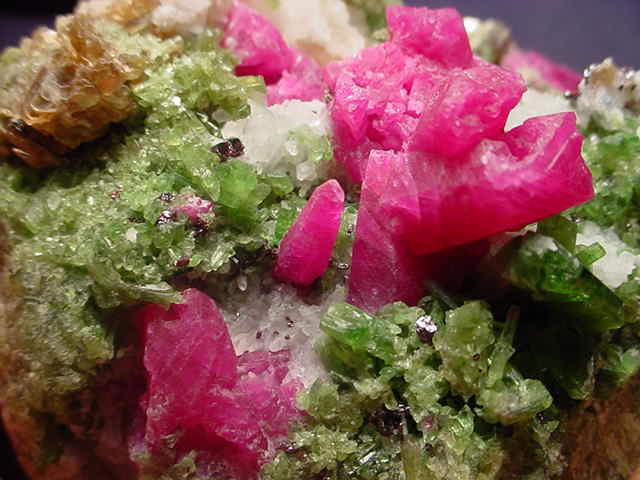
There are important gem localities in
Kenya.
The John Saul Mine is the most famous for its rubies, but
there is another locality in the Pokot tribal
territory along the border with Uganda that has produced a
few superb specimens. There are also
some interesting sapphire localities (Kwale, ...). |
|
| |
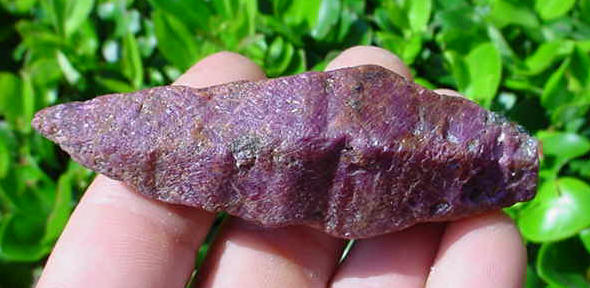
There are
numerous currently active localities for gem rubies and
sapphires in
Tanzania.
We will eventually have separate pages
for the more important mining areas. |
|
| |
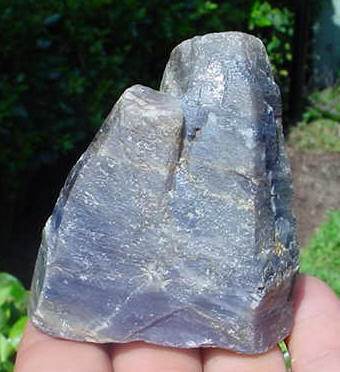
In
Sierra Leone
and the neighboring sub-Saharan country of Guinea, there are
a few interesting deposits.
Some recent finds of purplish sapphires
in layers of gravels overlying diamondidferous ones may be
of economic importance. We are assisting with current
attempts to develop these. |
|
| |
Somalia
is not (yet) an important source, but
there are a few fine stones, and some interesting provenance
... |
|
| |
The "Z" countries
(Mozambique, Zambia, Zimbabwe) are confusing, because this
is a case where they share common boundaries which
transect some of the deposits. It makes sense to
think of the deposits as regionally rather than politically
defined. |
|
| |
|
 |
 |
 |
 |
 |
 |
|
South Africa |
Kenya |
Tanzania |
Sierra Leone |
Somalia |
Mozambique |
|
|
| |
|
|
| |
Expect
the Continent of Africa to continue to reveal new
localities, as its "in the ground" resources are revealed
through exploitation of its surface resources (such as trees
and farmland). It is unfortunate, but a way of modern
life, that ecological disruption will be such a part of the
"landscape"! |
|
| |
|
|
| |
|
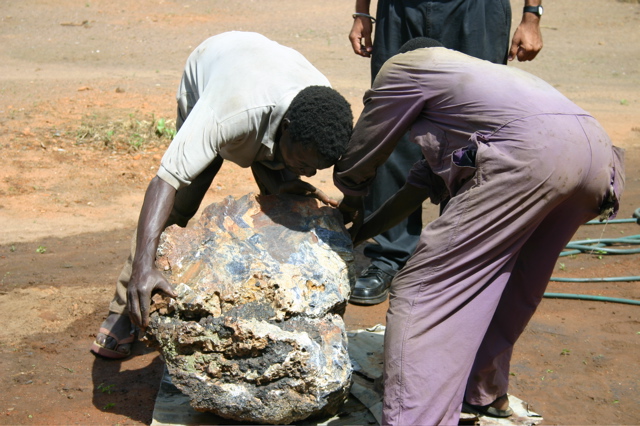
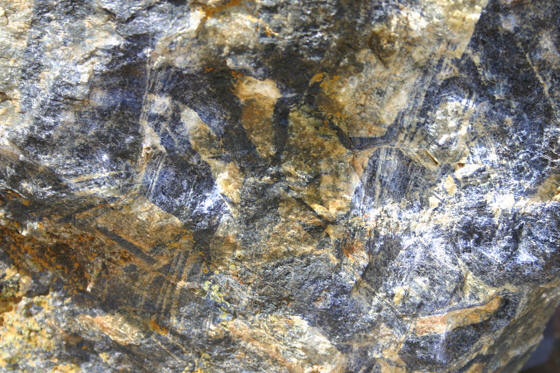
Here for example is a strange one. We think it
weighs at least 200 kilos (440 pounds)! Note
the geometric pattern of color zoning, indicative of
twinning in what may have been a huge crystal!
It might come to the United States for display; but
until someone is willing to pay the freight, it sits
in Africa.. |
 |
 |
|
|
| |
 |
 |
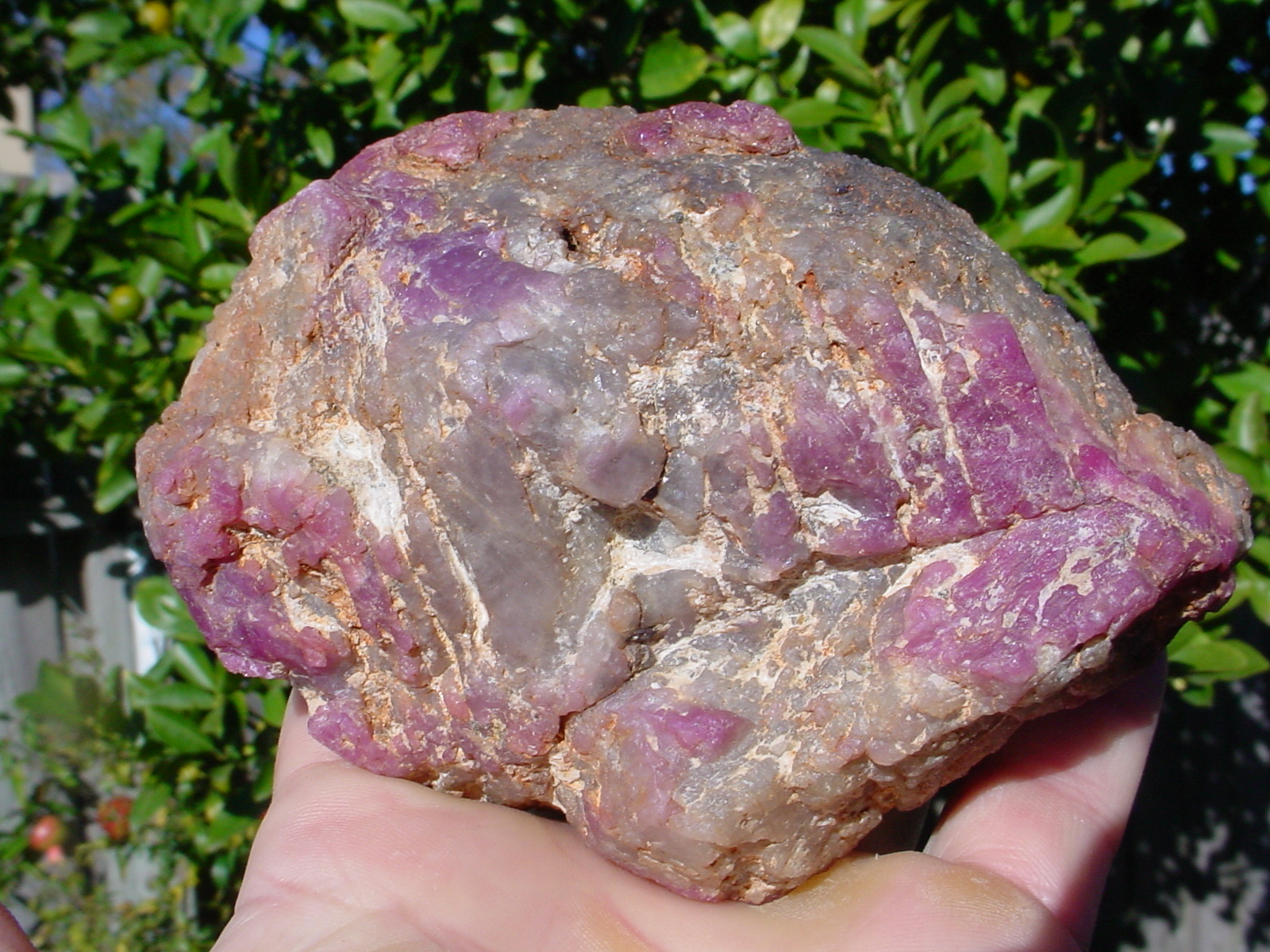
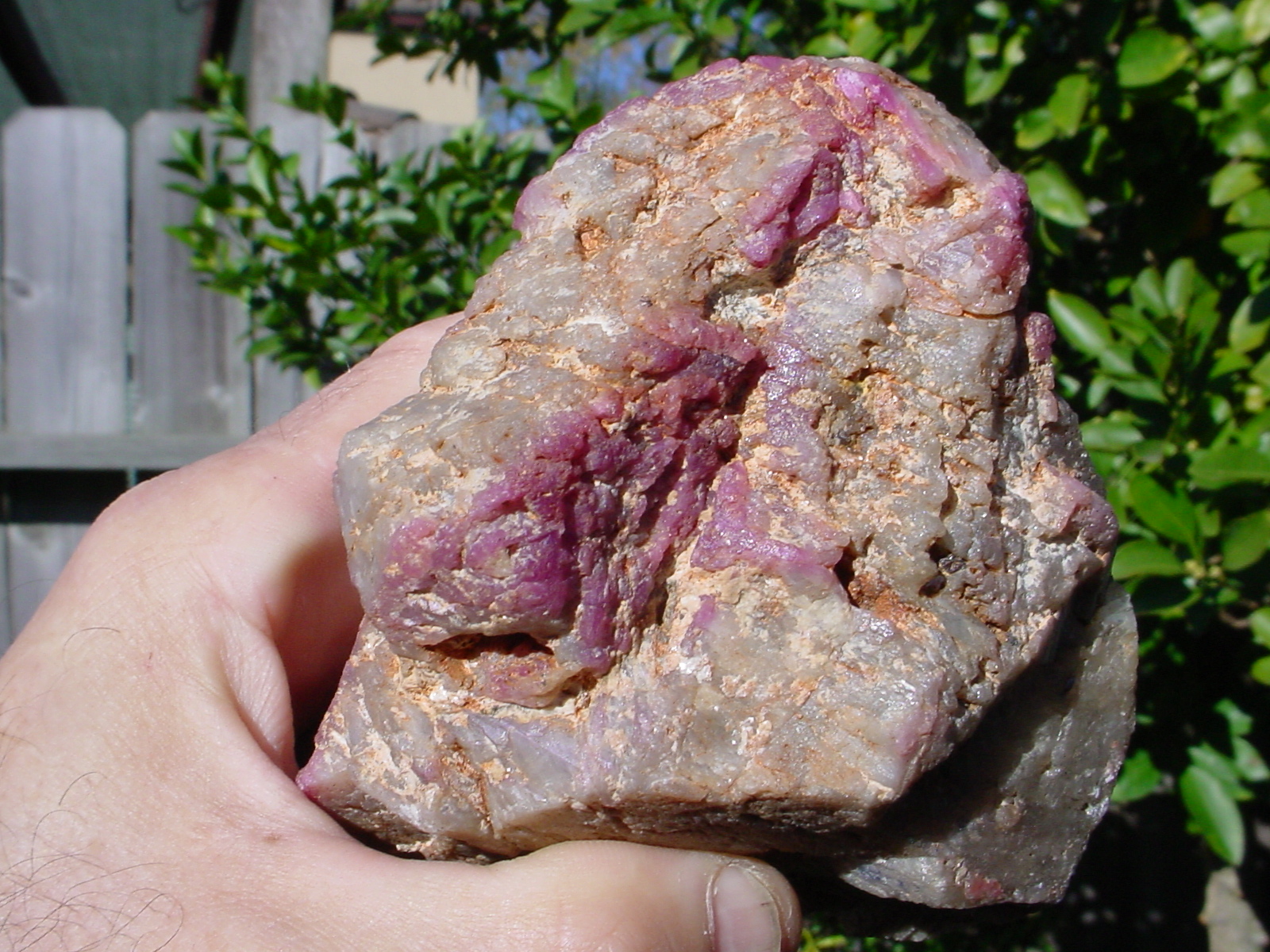
John
Saul sent us this large ruby/sapphire
"half-breed" crystal in January, 2011.
All the locality data we have on is that it cane
from somewhere in East Africa. I am fascinated
by it, because the only specimens I have seen that
are similar in appearance originated in India. |
|
|